


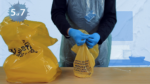


Spill Kits Training: Bodily Fluids
£20.00
This online training course aims to teach the user the best practices surrounding the handling of a spill of bodily fluids. Additionally, it looks into the dangers associated with the spillages.
The course aims to ensure the user is working towards compliance with The Control of Substances Hazardous to Health Regulations (COSHH) 2002, and how they can effectively deal with a spill and what procedure they should follow, including what is in a spill kit.
| Accreditations | CPD, Skills For Care |
|---|---|
| Course Duration | 15 mins (approx) |
| Languages | 41 |
Welcome to our comprehensive Spill Kits for Bodily Fluids Training. This program is tailored to enlighten you on the correct utilization of spill kits. Additionally, it focuses on the procedures for addressing bodily fluid spills. We highlight the critical need to grasp the elements of spill kits. Furthermore, we’ll guide you on responding adeptly to bodily fluid spills. Our aim? To significantly lessen health and safety hazards. In our journey, we will delve into vital topics across several key sections.
- Spill Kits : Begin by gaining a comprehensive understanding of what spill kits are and their importance in managing bodily fluid spills. In this section, you will learn about:
- The components of spill kits designed for bodily fluid spills, including absorbents, PPE (Personal Protective Equipment), and disposal materials.
- Different types of spill kits tailored for specific settings, such as healthcare facilities or public spaces.
- Proper storage and accessibility of spill kits to ensure quick and effective response.
- Dealing with a Spill : Explore the step-by-step procedure for responding to bodily fluid spills effectively. In this section, you will discover:
- The importance of immediate action to prevent the spread of infections and minimize health risks.
- How to assess the size and severity of the spill to determine the appropriate response.
- Techniques for using the spill kit components, including absorbents, PPE, and disinfectants.
- Procedures for proper cleanup, disinfection, and disposal of contaminated materials.
Upon finishing the Spill Kits for Bodily Fluids Training, you will master spill kits, their parts, and how to respond to bodily fluid spills. Your dedication to this training will lead to a safer, healthier environment by reducing risks from bodily fluid spills. Now, let’s embark on this journey to equip you with the knowledge and skills for effective and responsible handling of bodily fluid spills.
Related products


Food Safety & Hygiene Training – Level 3
This online training course is aimed at those who work with food and are in a managerial/supervisor role or are an employer/business owner. This training matched the CIEH syllabus and meets UK/EU legal requirements.
This Level 3 Food Hygiene training will include the content from both the Level 1 and Level 2 training and build on them to give learners an understanding of the additional information needed in their roles. Learn about the


Emergency First Aid at Work Refresher Training
This online training course has been designed to refresh the user's knowledge about the role of an emergency first-aider and their responsibilities. It is suitable for all levels of employees working in any industry.
The course aims to remind the user of their first aid duties in between their practical training. It will refresh their knowledge on how to assess a situation and circumstances to act safely & effectively in an emergency and how to administer CPR and use an AED.


Asthma Awareness Training for Schools & Carers
This training course was designed for anyone caring for children that have asthma. This course will provide an overview of the common types of inhalers and how to treat infants, juniors, and teens.
This course will look at what asthma is, the triggers and symptoms of asthma, the different kinds of medication, what to do when a child has an asthma attack and what your schools' responsibilities are.


Food Safety & Hygiene Training – Level 1
This online training course is essential for anyone that works with food, whether it is where it is made, sold, or served. Learners will find out more about food hygiene and how to handle food safely.
With more than 1 million cases of food poisoning each year, this Level 1 Food Hygiene training will provide an introduction to food safety, explain more about personal hygiene, cleaning and the storage, temperature, and time that food can be stored.


Fire Warden Training
This Fire Warden Training course will help your designated staff members in gaining the knowledge to become a fully trained Fire Warden or Marshal but does not replace practical training. This online training course will help your organisation work towards compliance with the Fire Safety Order 2005.
Assigning a responsible person with the duties of a Fire Warden is a critical component in making sure that your organisation reaches satisfactory health and safety standards. It also demonstrates due diligence and commitment to implementing emergency fire procedures at work.
This training course is divided into five different easy-to-digest sections, so that the user is able refer back to certain sections of the course if needed.


Display Screen Equipment (DSE) Training
Anybody who regularly uses display screen equipment is legally required to undertake DSE Training. This training course can help your organisation work towards compliance with The Health and Safety (Display Screen Equipment) Regulations 1992 & can help avoid injuries in the workplace.
This DSE Training course helps to ensure that your employees understand how to properly take care of their health whilst at work by ensuring that their immediate working environment is at its best


Accident Reporting Training
Accident reporting plays a crucial role in maintaining a safe workplace, as the aim of the practice is to ensure that the accident is not repeated. Under the Reporting of Injuries, Diseases and Dangerous Occurrences Regulations (2013), employers require "responsible persons" to report accidents, major injuries, dangerous occurrences, and even death in the workplace. Therefore, it is a legal duty to practice accident reporting.
This course, which is an introduction to accident reporting, helps the user to understand how to fill out an accident report form and what to include in it. Additionally, it covers what sort of accidents need reporting, as well as covering the legal obligations of the person reporting the accident.
 Fire Safety
 Mandatory Health & Safety
 Workplace Culture & Conduct
 Health & Social Care
 Safeguarding
 Food Safety
 First Aid
 Mental Health & Wellbeing
 Remote Working
 GDPR & Cyber Security
 Leadership